
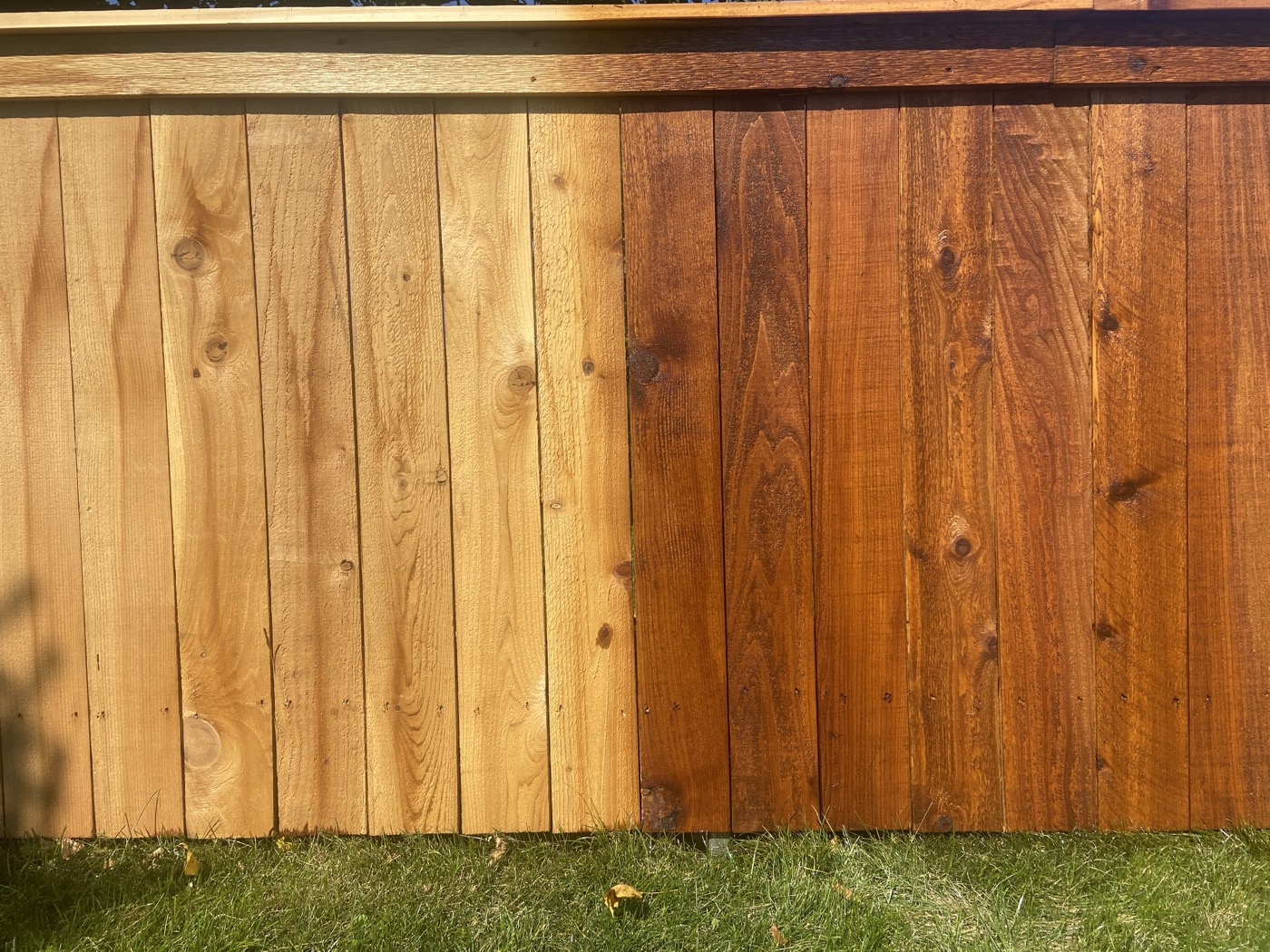
What a Professional Staining Job Actually Involves
Staining a deck or fence seems like a weekend project. Buy a can of stain, grab a brush, apply it. But the gap between a stain job that looks good for a year and one that holds up for four or five years almost always comes down to preparation, product choice, and application technique — things that take years of real jobs to get right.
Here's what professional staining actually involves, and why it tends to deliver results that DIY rarely matches.
1. Proper Preparation Is Everything
Most stain failures aren't caused by bad products. They're caused by staining wood that wasn't properly prepared. Professional staining contractors assess the wood condition before anything else — whether it's new lumber with mill glaze, a weathered deck with grayed fibers, or boards that still have an old coating bonded to them.
For weathered wood, the cleaning process involves chemical cleaners (typically sodium metasilicate) applied at the right concentration, followed by pressure washing and a wood brightener (oxalic acid) to neutralize the pH. Skip the brightener and your stain won't bond as well. Skip the cleaning entirely and you're staining over contaminants.
Studies of stain failures consistently show that 80% or more trace back to inadequate surface preparation — not product defects. Preparation is the job.
2. The Right Product for the Right Wood
Walk into any hardware store and you'll see dozens of stain products. Most homeowners pick based on color. Professionals pick based on wood condition, species, sun exposure, foot traffic, and how much maintenance the customer wants to deal with in future years.
There's a significant difference between film-forming stains (which sit on top of the wood and eventually peel) and penetrating oil-based stains (which absorb into the wood grain and don't peel). The right professional doesn't just grab whatever stain is cheapest — they recommend a product that fits the specific project.
Oil-Based Penetrating Stains
Absorb into wood grain. Don't peel or chip. Easier to reapply in future seasons. Better long-term performance.
Film-Forming / Solid Stains
Sit on the wood surface. Require meticulous prep when reapplying. Eventually peel, especially on horizontal surfaces.
Water-Based Stains
Require up to 15% moisture or less for proper adhesion. Slightly more forgiving on moisture levels but demand precise prep.
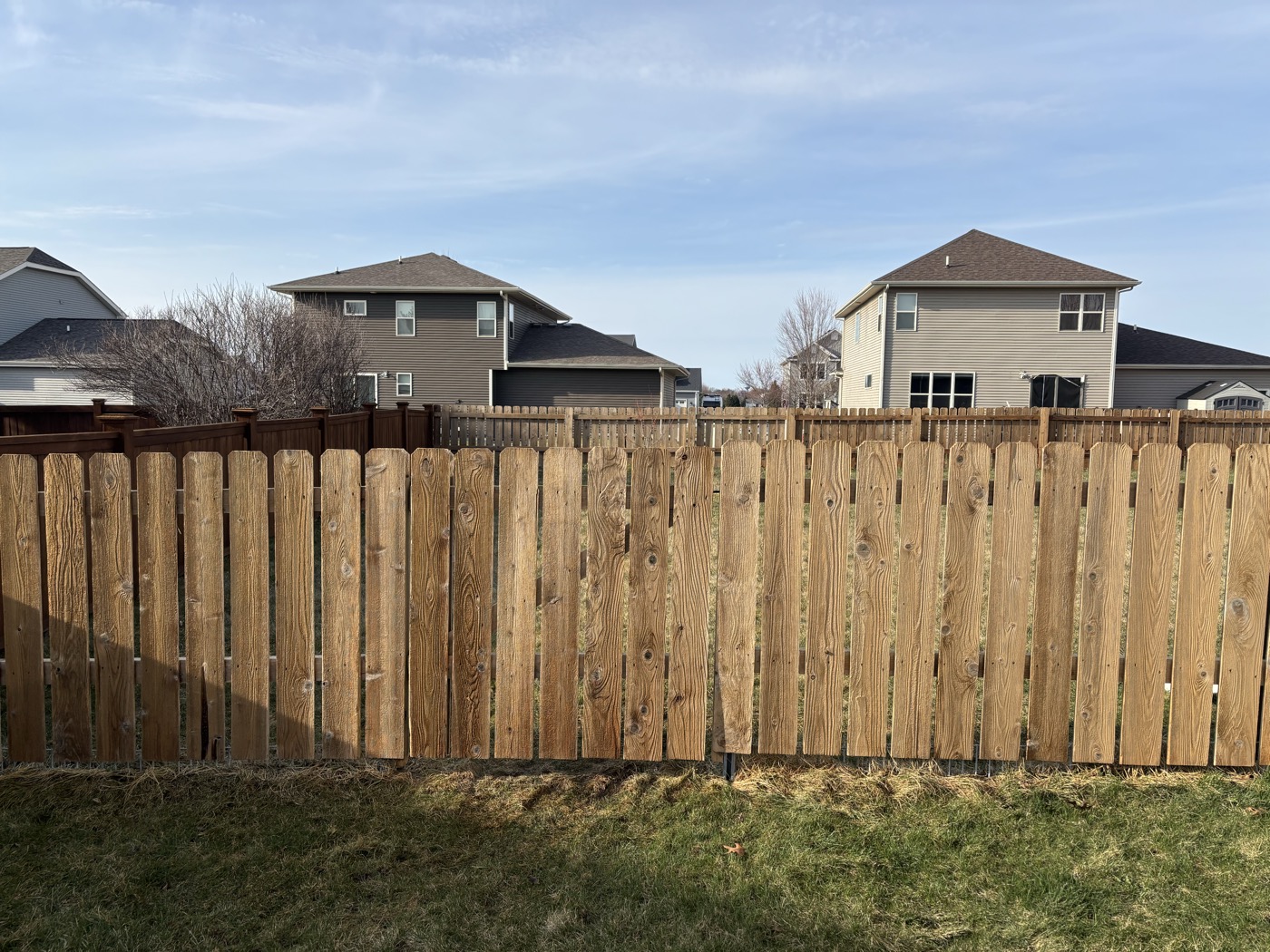
The Finished Result
A properly prepared and stained fence holds color evenly, resists UV degradation, and doesn't peel or flake because the stain is inside the wood — not sitting on top of it.
3. Safety and Equipment
Professional staining involves pressure washing equipment, chemical cleaners with proper PPE, extension tools for elevated surfaces, and spraying equipment for fences and spindles. Beyond the equipment itself, there's the knowledge of how to protect your landscaping, concrete, siding, and neighboring surfaces from overspray and drips — something first-time applicators often discover the hard way.
4. Time Is Real Money
A professional crew can clean, prep, and stain a standard deck in a fraction of the time it takes a homeowner working on weekends. That's not just convenience — it means the job gets done in the right weather window, with the wood at the right moisture level, rather than stretched across multiple weekends with rain delays between them.
5. Consistent Results and Accountability
When you hire a professional staining contractor, you have someone accountable for the outcome. Reputable companies stand behind their work. If something doesn't look right, you have recourse. With DIY, any mistake costs you additional time and materials to fix — assuming you catch the problem before it becomes a bigger issue.
A professional stain job on a well-prepped deck typically holds up 3–5 years before needing a maintenance coat. A rushed DIY job on improperly prepared wood can fail within a single season.
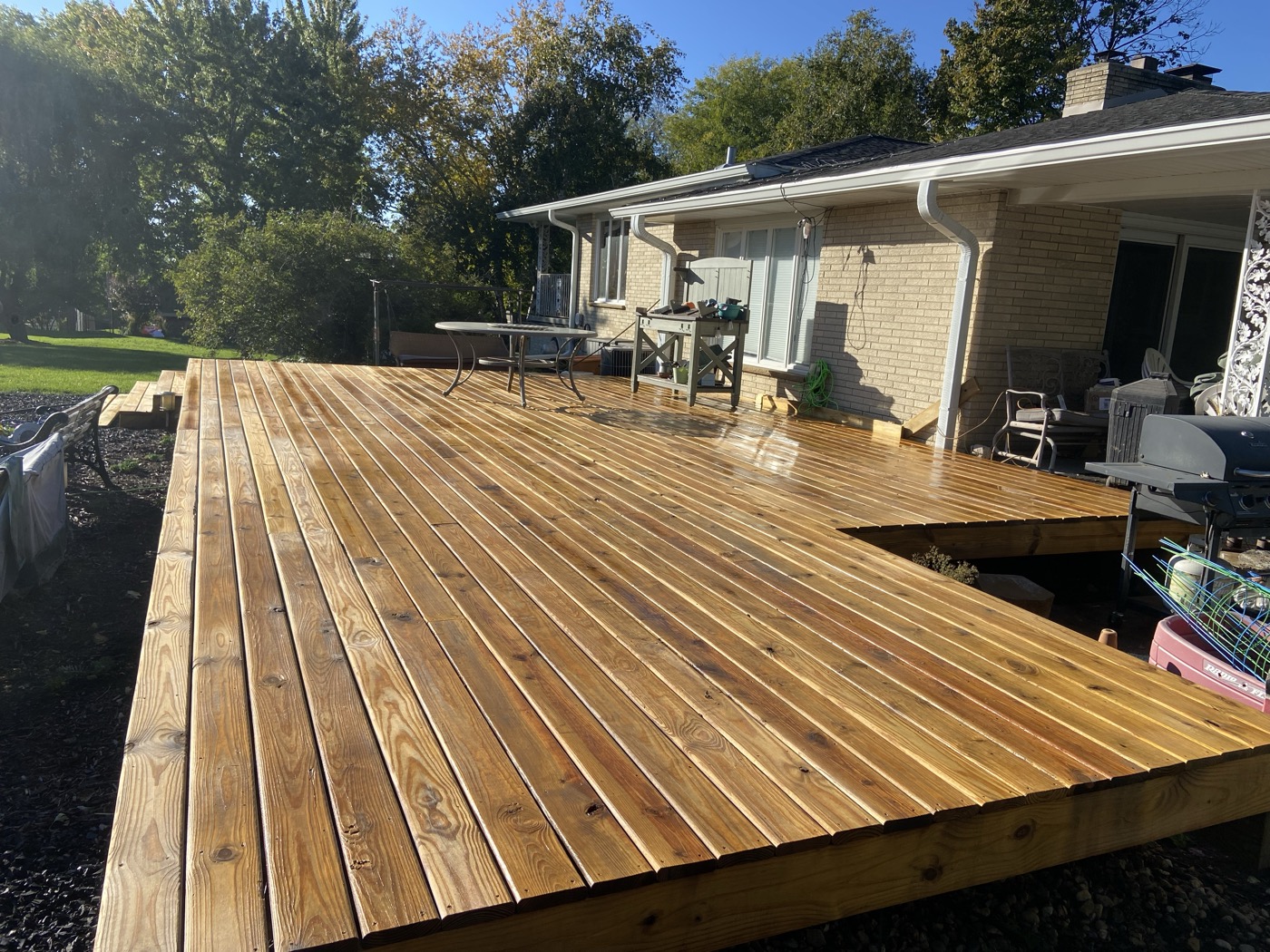
When Professional Help Is Essential
Large or Complex Projects
Extensive decks, multiple fence sections, or difficult access make professional help practically essential for quality results.
High-Value Wood
Premium woods like cedar, redwood, or exotic hardwoods deserve professional treatment to protect your investment.
Existing Problems
Mold, mildew, water damage, or failing finishes require professional assessment and treatment for proper correction.
Time Constraints
When you need the project done quickly before weather changes, professionals can deliver on tight deadlines.
What to Look for When Hiring
- Do they inspect the wood before quoting? Good staining contractors assess condition, not just square footage.
- Do they describe their prep process? Cleaning, brightening, and drying time should all be part of the conversation.
- Are they licensed and insured? This protects you if anything goes wrong.
- Do they use penetrating oil-based stains? Ask what product they recommend and why.
- Do they offer any kind of workmanship warranty?
Get a Free Estimate in Milwaukee
We'll assess your deck or fence, recommend the right product, and give you a clear, no-pressure quote. Serving Milwaukee, Madison, Brookfield, Menomonee Falls, Wauwatosa, and all Milwaukee Metro suburbs.
Request a Free Quote